Digital audio guide platform
GunjIndia
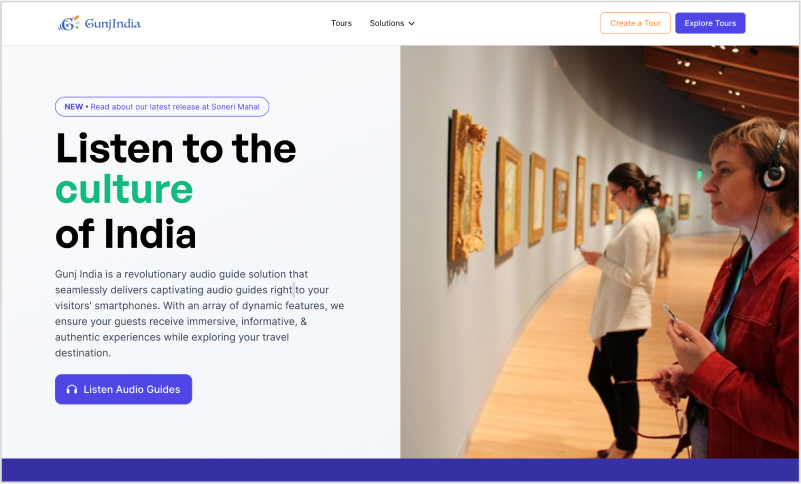
A browser-based digital audio guide platform that helps visitors discover and experience heritage sites through multilingual content on their own devices.
The problem
What we were trying to solve
Heritage sites need a simple way to deliver rich, multilingual visitor experiences without requiring people to install an app or rely on dedicated audio guide hardware. The platform also needed to support payments, visitor access, content management, and operation across multiple heritage locations.
My role
Where I contributed
As my own startup, I have been responsible for the technical side of GunjIndia from end to end. This includes frontend and backend development, application architecture, APIs, database design, authentication, payment integration, DLT-compliant SMS, content management, deployment, and ongoing technical development.
The approach
How the work took shape
I built GunjIndia as a browser-first platform where visitors can scan a QR code and access location-specific digital experiences directly from their phones. A custom CMS allows the team to manage locations, languages, audio, images, videos, and other visitor content without requiring developer involvement.
Building it
Decisions behind the product
The platform grew beyond a simple audio player into a complete visitor experience system. It integrates browser APIs, payment workflows, SMS communication, visitor sessions, multilingual content delivery, analytics, and administrative tools while keeping the visitor-facing experience intentionally simple.
Architecture
How it fits together
- 01Visitors scan a QR code to access a heritage location
- 02The platform establishes visitor access and session information
- 03Location and multilingual content is retrieved through the application API
- 04Audio, images, video, and other media are delivered through the browser
- 05Payments and DLT-compliant SMS support paid visitor experiences
- 06A custom CMS manages locations, languages, media, and visitor content
Challenges
The interesting constraints
The biggest challenge has been keeping the visitor experience simple while the system behind it handles multiple locations, languages, media formats, payments, access control, messaging, and content administration. It also needs to work reliably on visitors' own devices and across varying network conditions.
Outcome
What was achieved
A production digital heritage platform capable of delivering multilingual audio-led experiences across multiple heritage locations without requiring visitors to install an application.
Next project